To quit nicotine, choose whether you will stop at once or cut down first, set a date, get rid of the easy pouches or portions, plan what you will do when a craving hits, and line up free support. Seven steps follow, written for people who use nicotine pouches or snus. The order matters less than doing all of them.
Step 1: Understand what you are up against
Nicotine raises dopamine in the brain’s reward circuits, which teaches the brain to repeat whatever brought it1. The brain also links that reward to the places, times and moods where you use, so those moments start to bring on the urge by themselves1. Sweden’s 1177 health guide says the same for snus: dependence is largely the brain’s dependence on nicotine, but also habit and learned behavior2.
Smokefree.gov puts it plainly: nicotine addiction causes stress, because cravings are the start of withdrawal3. So part of the calm a pouch seems to bring is simply the end of the last craving.
That gives you two jobs. One is getting through withdrawal while your body adjusts. The other is breaking the routines that ask for a pouch. A plan needs both. The starting point score gives you a snapshot of how strong your habit is today.
Step 2: Choose your method
You can stop on one day, or cut down first and then stop. In studies of people who smoke, the two led to similar long-term quit rates4. Norway’s Helsenorge puts it simply: some people do best with careful planning, and others with stopping at once5.
Pick the one you will actually follow. If you use few pouches, stopping at once may be the simpler choice. If you use many, or strong ones, a few weeks of cutting down can make the last day feel less like a cliff. Cold turkey or taper? goes through the choice.
Step 3: Set a date, or start now
Sources disagree on how far ahead to plan. Smokefree.gov advises a date no more than a week or two away6. Helsenorge suggests two to four weeks ahead to leave time to prepare5. Both are advice, not trial results. Helsenorge also says to decide in advance whether you will step down before the date or carry on as usual until it5.
If you feel ready today, you do not have to wait. In an English survey, about half of people who smoked said their latest quit attempt started the moment they decided, and unplanned attempts were more likely to last six months7. That shows a link, not proof that planning hurts. How to pick a quit date helps if you want one.
Step 4: Cut down the easy ones
Even if you plan to stop at once, the days before your date are a good time to practice. 1177 suggests these ways to use less snus, and most work for pouches too2:
- Use smaller portions, or move from loose snus to portions.
- Keep your cans where you cannot see them.
- Leave the can at home sometimes.
- Keep each pouch or portion in for less time.
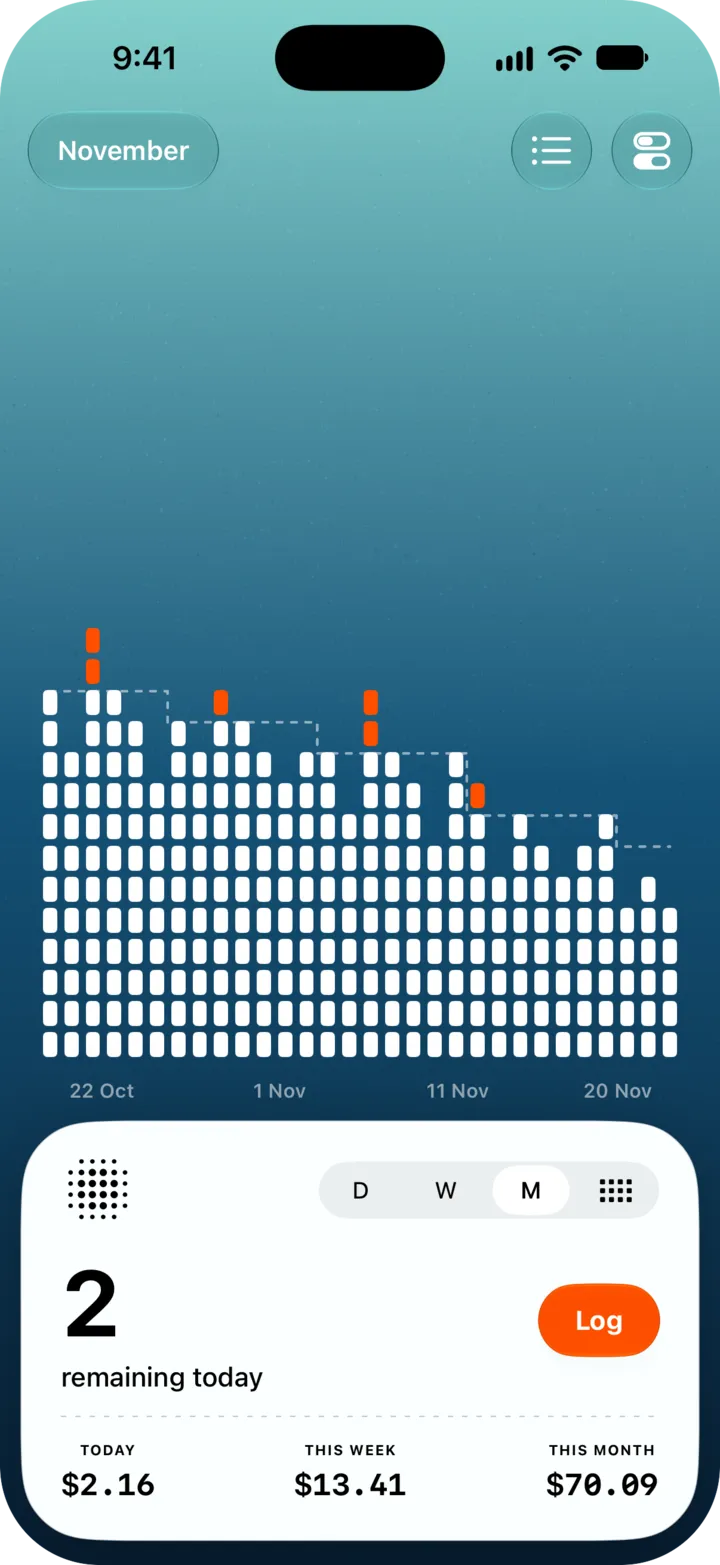
1177 also suggests noting every portion for a day, then dropping the ones you need least first, and lists nicotine-free snus as one more way to cut down2. We found no trial of nicotine-free pouches as a quit aid. NoSnus turns this into a daily plan, with a limit in pouches and milligrams for each step and a log of every pouch. How to cut down on nicotine pouches has more ways to do it.
Step 5: Plan for cravings before they come
A single craving is short. 1177 puts it at 20 to 30 seconds for snus2. The aim is to have a plan ready for that window.
- Change what you are doing. Smokefree.gov suggests stopping what you are doing and switching to something else8.
- Breathe slowly. Take about 10 slow breaths, each one drawn in through the nose and let out through the mouth8.
- Get up and move. Even a short walk counts: a review of experiments in people who smoke found that short bouts of exercise eased a craving while it was happening9.
- Make if-then plans. In one trial, people who smoked and wrote specific “if this happens, then I will do that” plans were more likely to quit10. Helsenorge gives a simple one to copy: when a craving comes, drink a glass of cold water5.
Step 6: Get support
Norway’s Directorate of Health says most people who quit smoking or snus do it on their own, but that many need support11. Some kinds of support have good evidence behind them, and some are still untested:
| Support | What the research found | Who it was measured in |
|---|---|---|
| Counseling | Raised quit rates compared with minimal support12 | People who use smokeless tobacco |
| Quitlines where a counselor calls you | Helped people who contacted quitlines13 | Mostly adults who smoke |
| Text message programs | More people quit than with minimal support14 | People who smoke |
| Quit apps | Evidence of very low certainty so far14 | People who smoke |
| Nicotine replacement | May help more people quit than no medicine; low certainty12 | People who use smokeless tobacco |
We found none of them tested in people quitting nicotine pouches yet. In Sweden, the free Sluta röka-linjen helps people quit snus2. In Norway, the national phone line closed in 2017, and the Directorate of Health now offers an app called Slutta11. Nicotine replacement is something to talk through with a doctor or pharmacist, and teens, people who are pregnant and people with serious health conditions should talk to a doctor first15. Free help to quit nicotine pouches lists services by country.
Step 7: Expect a hard stretch, and plan for slips
For snus, Sweden’s 1177 says withdrawal usually passes in 1 to 3 weeks, while cravings and a bigger appetite can last longer2. We found no such studies in pouch users, and people vary. The list of withdrawal symptoms covers what is common.
If you slip, what you do next matters. In a study that recorded slips as they happened, people who felt like giving up after a first slip lapsed again sooner, and people who tried to get back on track straight away were less likely to lapse again that day16. Treat a slip as information about a moment you had not planned for, add it to your plan, and carry on.