To quit nicotine pouches, decide whether you will stop on one day or step down first, set a date no more than a few weeks away, plan for the moments you usually reach for a pouch, and line up free support before that day. The steps are the same whether you use Zyn, Velo, On!, Rogue or another brand.
Why the brand does not change the plan
Brands differ in flavor, pouch size and strength. They do not differ in how you quit.
Strength is the part that matters for your plan. The milligrams on the can are what is in the pouch, not what reaches your body. In one study, a 6 mg Zyn released about 3.5 mg of nicotine into the mouth and a 3 mg Zyn about 1.5 mg1. One of its authors worked for Zyn’s maker, and it measured single pouches, not daily use. The useful point is simple: a lower-strength pouch gives you less nicotine, which is why stepping down strength is one way to taper.
Choose your method: stop at once or step down
You have two main ways to quit.
- Stop at once (cold turkey). You pick a day and use no pouches from then on.
- Step down first (taper). You cut the number of pouches, the strength, or both, over a few weeks, then stop on a set day.
In studies of people who smoke, the two methods led to similar long-term quit rates2. Cutting down first did not clearly change withdrawal either2. One large trial in England found more people stayed quit at 6 months after stopping abruptly: 22% against 15.5%3. We found no trial comparing them in pouch users, so pick the one you will actually follow. Cold turkey or taper? goes through how to choose.
| Stop at once | Step down first | |
|---|---|---|
| What you do | Pick a day, then no pouches | Fewer or weaker pouches over weeks, then stop |
| Time before your last pouch | A week or two to prepare4 | About 3 to 4 weeks of cutting down in Sweden’s advice for snus5 |
| What studies in smokers found | Similar long-term results; one trial favored it23 | Similar long-term results2 |
| Can suit you if | You want a clean break | You want time to practice days with fewer pouches |
Set a date
Whichever method you choose, put a date on it. Smokefree.gov advises a quit date no more than a week or two away, because a date too far off gives you time to lose interest4. If you step down first, the date sits at the end of your taper. Sweden’s 1177 health guide suggests cutting down for three to four weeks and then stopping completely5.
If you step down: count, strength or both
There are two levers, and you can use one or both.
Fewer pouches. Write down every pouch for a day and what you were doing at the time. Then drop the ones you need least. 1177 says these are often about half of a day’s use5. Truth Initiative suggests “mini-quits”: skipping a pouch you would normally have6.
Lower strength. Truth Initiative suggests that people on 6 mg or 9 mg pouches move to 3 mg to ease into quitting6. Keep the count steady when you change strength, and do not use two pouches at once to make up the difference.
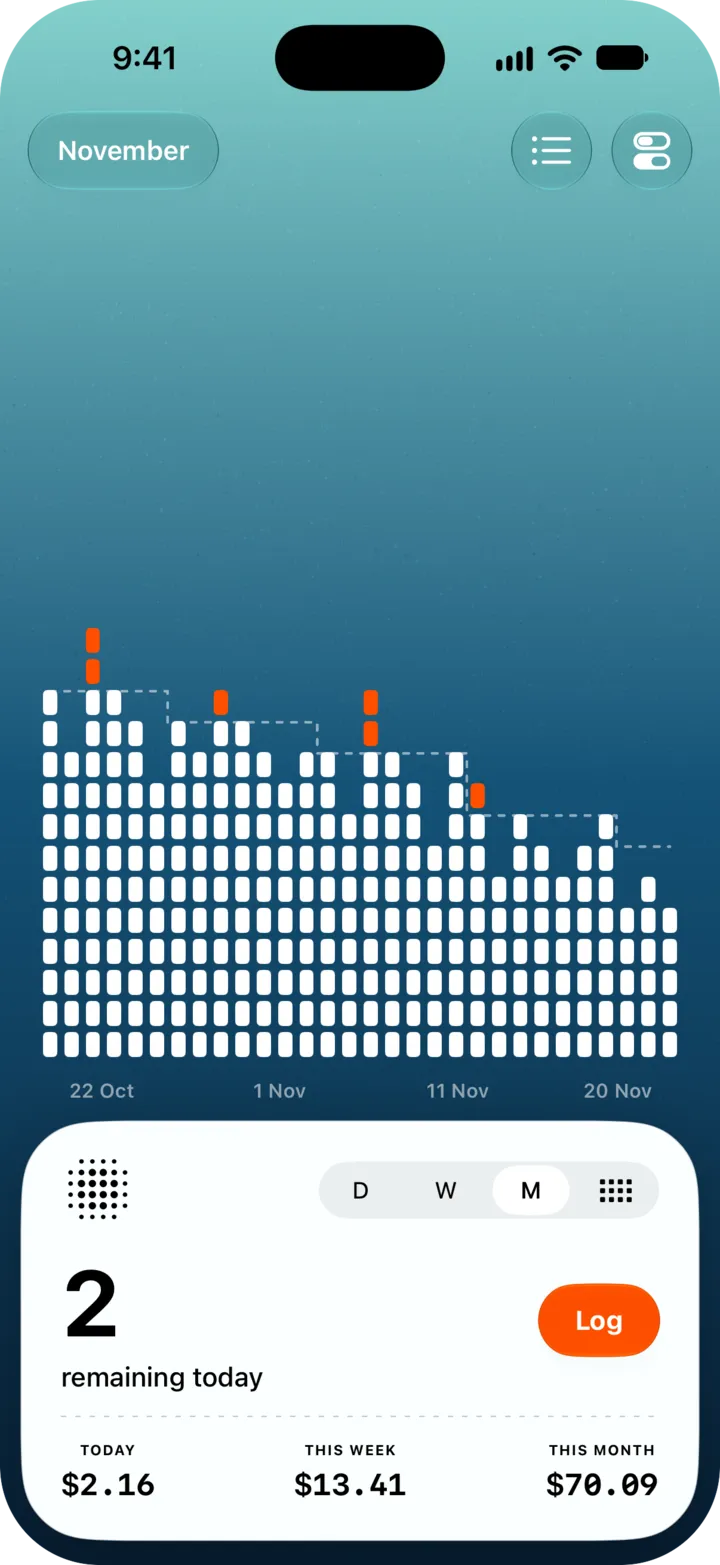
We found no test of a step-down schedule for pouches, so any schedule is a planning estimate, not a medical protocol. The nicotine taper schedule tool builds one from your count and strength, and How to taper off Zyn shows worked examples by count and milligrams. In NoSnus you log each pouch against the step’s daily pouch limit, and the app also checks a milligram ceiling it works out from the step’s strength.
What the first weeks are commonly like
Most of what is known about withdrawal comes from people who quit smoking. Sweden’s health service describes a similar pattern for snus. We found no study recording withdrawal in people quitting nicotine pouches, and people vary a lot, so treat these as rough ranges.
| Time after your last pouch | What is commonly reported |
|---|---|
| Days 1 to 3 | Withdrawal usually peaks7 |
| First week | Usually the hardest week7 |
| Weeks 1 to 4 | Symptoms usually ease over the first month7; for snus, 1177 says 1 to 3 weeks5 |
| Beyond that | Cravings and a bigger appetite can last longer5 |
The symptoms 1177 lists for snus are worry, trouble concentrating, low mood, restlessness, poor sleep, irritability and a bigger appetite5. The nicotine withdrawal timeline goes through each stage.
Handling cravings and triggers
A single craving passes quickly. 1177 puts it at 20 to 30 seconds for snus, and the NHS says a few minutes58. Your job is to have something ready for that short window.
Most cravings are tied to routines. The NHS lists waking up, coffee, driving, work breaks and finishing a meal among the common ones8. For each of your pouch moments, decide in advance what you will do instead. 1177 suggests a glass of water or switching to another activity5. After meals, the NHS suggests minty gum or brushing your teeth8.
Drinking deserves its own plan. The NHS says alcohol weakens self-control and makes cravings harder to resist, and suggests non-alcoholic drinks in the first 28 days8. How to stop nicotine cravings has more ideas for the moment itself.
Get free help
You do not have to do this alone. For people quitting smokeless tobacco, counseling and brief advice probably help more people quit than little or no support, a 2025 Cochrane review found9. We found no trial of support made for pouch users.
- Quitlines. US quitlines give free phone coaching10. The numbers for your country are listed on this page.
- Text and online help. Truth Initiative’s EX Program is free; you join by texting EXPROGRAM to 887096.
- Nicotine replacement. Gum, lozenges and patches are options to discuss with a doctor or pharmacist. For smokeless tobacco, nicotine replacement may help more people quit than no medicine, though the evidence is low certainty9.
Nicotine pouches themselves have no FDA approval as a way to stop smoking11.
If you slip
One pouch after your quit day is a lapse, not a relapse, as the NHS puts it for smoking12. Work out what set it off, and plan for that moment next time. If one turns into several, restart right away, today or tomorrow at the latest13. Had a pouch after quitting? covers what to do next.