One week without nicotine usually means the worst is behind you. Withdrawal is commonly strongest in the first week, especially the first 3 days1, and from there its strength usually drops over the first month2. What often lingers at day 7 is a lower level of the same symptoms: cravings that still come and go, some irritability, unsettled sleep and a bigger appetite.
Most of these timings were measured in smokers. Health services in Sweden and Norway describe a similar course for snus. Hardly any research has followed people quitting pouches, and everyone’s course is different, so read each range as commonly reported, not promised.
Where a week puts you
| Point after quitting | What the sources commonly report | Studied in |
|---|---|---|
| Days 1 to 3 | The peak of withdrawal2 | All tobacco users |
| End of week 1 | The main mood and sleep symptoms have peaked3 | Review of 120 smoker studies |
| Weeks 1 to 3 | Withdrawal usually goes, though cravings and appetite can last longer4 | Snus guidance, Sweden |
| Weeks 2 to 4 | Those symptoms fade; they last 2 to 4 weeks in total3 | Review of smoker studies |
| About 4 weeks | Symptoms are usually gone5 | Snus and smoking guidance, Norway |
| 1 month | Most symptoms back to pre-quit levels; hunger and craving continue in many6 | 315 smokers in a trial |
So at one week you are usually on the downslope, with a few weeks of fading symptoms still ahead. Some people feel them for longer, sometimes for a few months1. The days without nicotine tool shows this on a timeline for your own quit date.
What still lingers after 7 days
Cravings. They can still come often for days or weeks after quitting2. The difference is that each one you resist makes the next ones weaker over time7. The guide on how long nicotine cravings last goes into the timing.
Sleep. Sleep changes seem to last for the first few weeks of withdrawal in studies of smokers8.
Appetite. A bigger appetite after quitting snus can outlast the other symptoms4. Plan your snacks now, not in the middle of a bad afternoon.
Constipation. In a study of people who quit smoking, about 1 in 6 became constipated, and it peaked at 2 weeks9. If it starts now, fluids, fiber and a daily walk help10.
What a week has already changed
Your brain is still adjusting after 7 days. Regular nicotine use builds up extra nicotine receptors, and they take about 3 weeks for some people and months for others to return to normal11. Brain imaging in 19 smokers found receptor levels had returned to those of non-smokers 6 to 12 weeks after quitting12. Norway’s health directorate thinks this slow return is probably part of why cravings can linger for weeks11, so the pull does not vanish at day 7.
Stress is worth a second look too. Smokefree.gov points out that nicotine addiction itself causes stress, because a craving is the start of withdrawal13. A review of smoker studies found that stopping leads to lower stress14. In smokers, the calm a dose seemed to bring was mostly relief from the craving that came before it14.
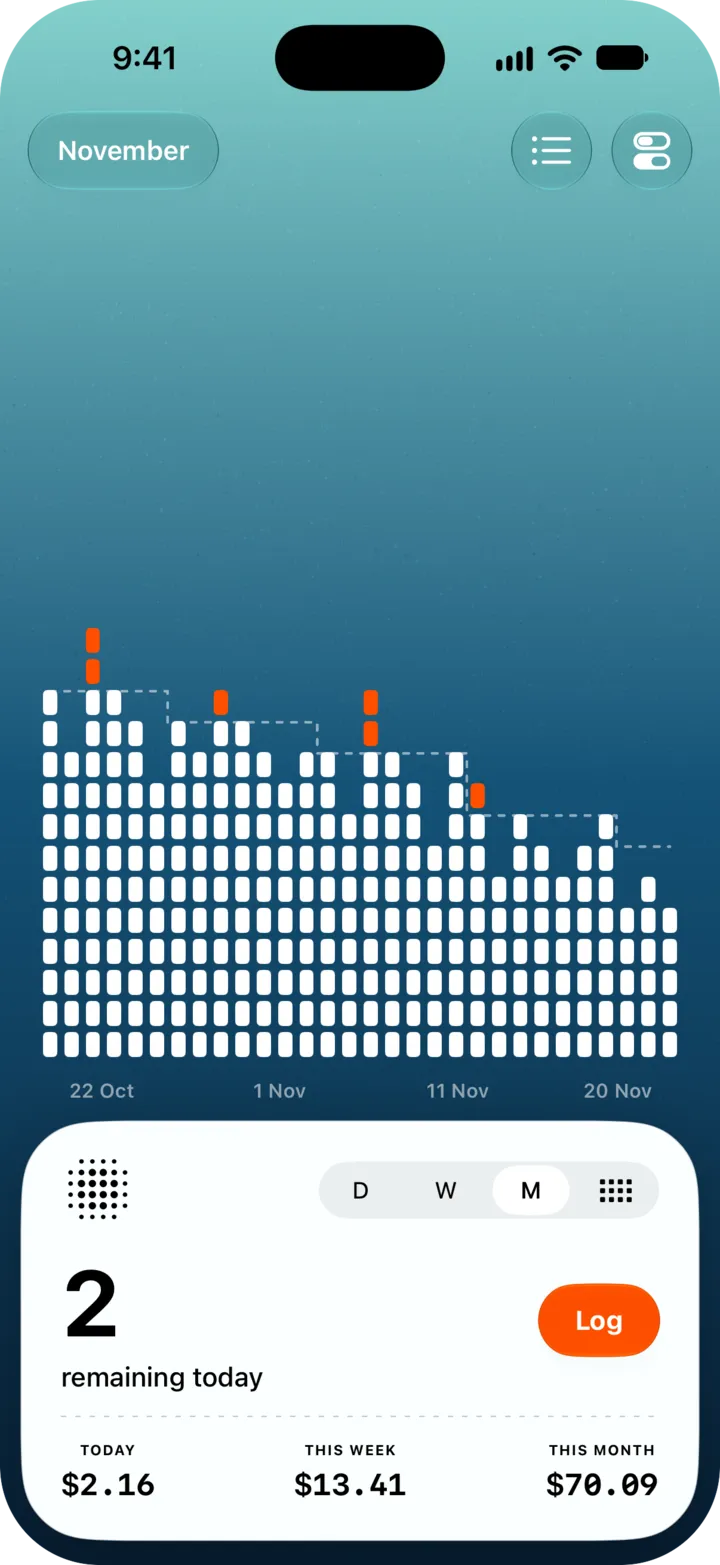
There is also the money. The money saved calculator shows what a week without pouches has kept in your pocket, and what a year would.
Why the first week matters so much
Of all the stretches in a quit attempt, the first week carries the highest risk of going back to nicotine15. Among smokers who tried to quit on their own, studies found most relapse came within the first 8 days16. And in three medication trials, smokers who got through the first week with no lapse were far more likely to still be quit at 6 months17.
If you are at day 7 with no pouch, you are through most of the stretch where, in studies of smokers, quit attempts usually end. That is worth noticing.
Planning week 2
Week 2 is less about withdrawal and more about habits. Norwegian health authorities note that habit, more than the body, tends to become the main hurdle as time passes11. Triggers such as certain people, places and situations can bring on urges even years after quitting18.
Three things to plan for:
- Drinking. In a real-time study of smokers who drink, alcohol use was linked to lapses from day 1 in the less dependent smokers, the link grew stronger until about day 7, and it had gone by day 2519. That makes the end of week 1 a time to be careful with drinks. The NHS suggests non-alcoholic drinks when you are out, especially in the first weeks20. See quitting Zyn and drinking.
- Your top triggers. Write a specific “if this, then that” plan for your two hardest moments. A randomized trial of 168 smokers found that writing plans like this made quitting more likely21.
- Stress. Feeling stressed or low can raise the urge for snus, says Norway’s health portal22. In a real-time study of smokers, slips set off by stress moved faster toward a full relapse than slips around eating or drinking23. Decide now what you will do when a stressful day hits.
If you chose to cut down instead of stopping outright, NoSnus sets a daily pouch limit for each step of the plan, and you log each pouch against it.
If you slipped in week 1
A single pouch is a lapse, not a relapse24. It does not mean you failed or are back to square one25. Ask yourself what led to it and how you will handle that moment next time25. Then begin again at once, no later than tomorrow25. Researchers who logged slips in real time found that blaming yourself after the first one did not make a return to regular use more likely26. The guide on what to do after a slip has the full plan.
When to get help
If your mood is sinking further or not lifting, tell someone close and book a talk with a health professional. Should you ever feel in danger of harming yourself, a crisis line will talk with you at any hour27. A free quitline can coach you through the next weeks by phone28.
The weeks either side
Days 4 and 5 without nicotine covers the days just behind you. Next, two weeks without nicotine explains why week 2 can still feel hard.