For most people, nicotine withdrawal lasts about 2 to 4 weeks: it is worst in the first 3 days and then fades, though some people feel symptoms for a few months123. Cravings are the exception. They come less often after the first month but can return now and then for months or years41.
What each health service says
We could not find a study that timed withdrawal in people quitting nicotine pouches. The answers below come from guidance for smokers and snus users, and they broadly agree.
| Source | Written for | How long it says withdrawal lasts |
|---|---|---|
| NHS (England) | People quitting smoking | 3 to 4 weeks on average; for some, a few months3 |
| National Cancer Institute (US) | Any tobacco product | Worst in week 1, peaking in the first 3 days; eases over the first month1 |
| Quit (Australia) | Smoking or vaping | Gone after about 2 to 4 weeks for many people2 |
| Review of 120 studies | Smokers | Main symptoms peak in week 1 and last 2 to 4 weeks5 |
| 1177 (Sweden) | Snus | 1 to 3 weeks; cravings and appetite can last longer6 |
| Helsedirektoratet (Norway) | Snus | Usually gone 2 to 4 weeks after quitting; worst in the first 2 to 3 days7 |
| Helsenorge (Norway) | Snus and smoking | Usually gone about 4 weeks after quitting8 |
Withdrawal is different for everyone9. Norway’s health directorate notes that for some people it lasts up to three months10. Use the ranges as a guide, not a deadline.
Physical withdrawal and the habit side
Withdrawal has two parts that run on different clocks.
The physical part is your brain adjusting to life without nicotine. Regular use makes the brain grow extra nicotine receptors11, and Norway’s health directorate says they take anything from about 3 weeks to months to come back down, depending on the person10. In a brain-scan study of 19 smokers, receptors were back to non-smoker levels 6 to 12 weeks after quitting12. We found no scan like it in pouch users. Snus also delivers nicotine differently from smoke: it soaks in slowly through the mouth’s lining, without a sharp spike, and keeps coming for longer10. We found no study of whether that changes how long withdrawal lasts.
The habit part lasts longer. Using nicotine again and again in the same situations, like after a meal or with coffee or a drink, ties those moments to it11, and your brain links those cues with the nicotine hit13. That is why cravings can come back long after your body is no longer dependent, often when you are around old triggers1. Norway’s health directorate describes the shift: withdrawal is the main hurdle early on, while the mental pull can turn into the tougher part later10.
How long each symptom tends to last
- Irritability and anger: peak within 1 week and may last 2 to 4 weeks1.
- Anxiety: builds over the first 3 days and may last several weeks1.
- Low mood: often begins on day 1, lasts a couple of weeks and lifts within a month1.
- Poor sleep and trouble concentrating: peak in week 1 and last 2 to 4 weeks in smokers5. See the guide to sleep after quitting.
- Constipation: in people quitting smoking it peaked at 2 weeks and was still raised at 4 weeks14.
- Hunger and cravings: in a trial of 315 smokers, these kept going for 6 months in many people, after other symptoms had settled at 1 month15. For some people a bigger appetite lasts six months or more4.
The withdrawal timeline puts all of this in order, stage by stage.
What makes withdrawal stronger or weaker
How strong withdrawal feels depends on how long you used nicotine, how often, how much each time, and your age, genes and general health, according to Cleveland Clinic16. We found no study of how any of these affects the length of withdrawal in pouch users. Here is what the evidence says about other factors:
| Factor | What the evidence says |
|---|---|
| Staying off nicotine | Sticking with the quit helps symptoms get easier more quickly9 |
| Tapering first | Smoker trials found no clear difference in withdrawal between cutting down first and stopping at once17 |
| Nicotine replacement or quit medicines | Can make symptoms easier to handle; ask a doctor or pharmacist9 |
| Sleep | Poor sleep leaves you less able to cope, which raises the risk of a slip9 |
| A history of depression | Often means stronger withdrawal; talk to a doctor before quitting1 |
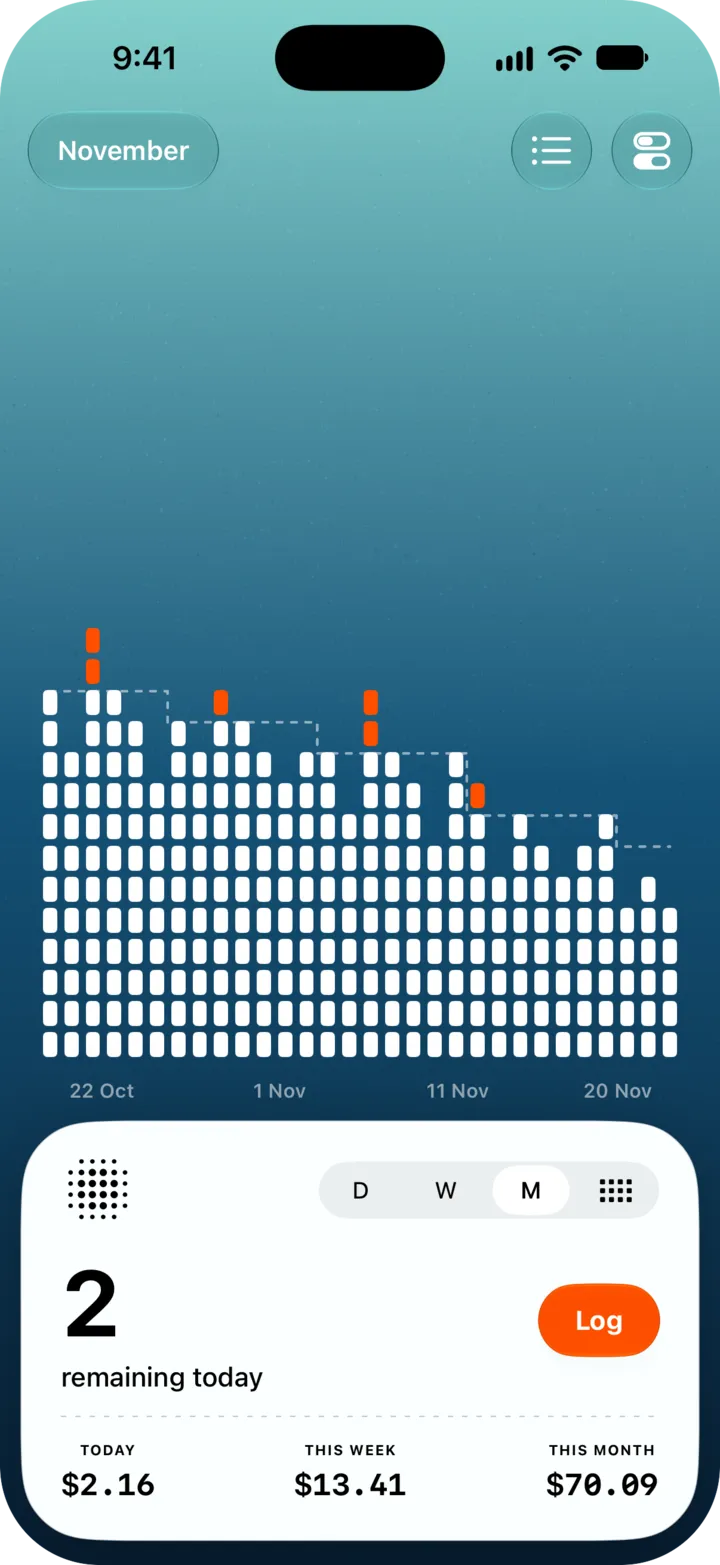
If you are cutting down first, NoSnus lets you log each pouch against a daily limit, so you can watch your use fall before your quit day. Read cold turkey or taper to choose between the two.
Why it can feel longer than it should
Recovery is not always a smooth slope. Over the first weeks, symptoms often come and go18. Some people’s symptoms drop and then rise again a few weeks later, or do not go away for several weeks4. Smokers in two nicotine patch trials whose symptoms rose again later on were more likely to relapse19. If week 2 or 3 is harder than week 1, you are not going backwards. It is a known pattern, and a good time to call a quitline or talk to a doctor.
You may have read that withdrawal is over after 72 hours. It is not. The worst usually comes on day 2 or 3, and after that symptoms ease a little each day for 3 to 4 weeks16.
How long cravings keep coming
Norway’s health portal says an urge lasts only a few minutes20. For snus, 1177 says one strong urge usually holds for only 20 to 30 seconds6. Over weeks, they come less often. By the end of the first month, strong urges tend to thin out, and some days pass without one4. Occasional mild cravings can still come months or years later1. For more, see how long cravings last. The days without nicotine tool shows how far along you are.
When to get help
Talk to a doctor, pharmacist or quitline if withdrawal is hard to handle, or if it is still strong after the first month. If you feel down and it is getting worse or not easing, talk to a friend or family member and to a health professional9.